
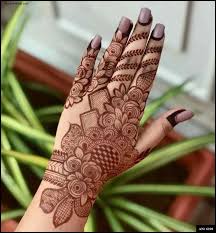
Definition of Henna Plan:
Henna plan is a craftsmanship that individuals apply to their hands. There are distinctive designs, such as Indian, Arabic, Moroccan, and Blossom Mehndi plans.
A long time ago, individuals utilized to urge only one plan done repeatedly since they did not know how to create Mehndi plans, that’s why they used to urge the same design applied over and over and presently everybody makes diverse plans on each hand.
Mehndi Could be a Shape of Body Craftsmanship:
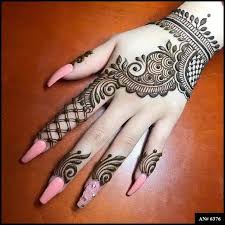
Mehndi may be a frame of body craftsmanship in which a glue made from the henna plant is utilized to form lovely plans on a person’s skin, as a rule on their hands and feet. Such plans are exceptionally prevalent among individuals.
Mehndi Hone in Hindu Culture:
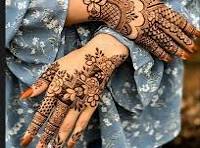
In Hindu culture, henna is utilized as a custom enhancement on the bride some time recently her wedding and as an implication of wishing the bride great good fortune and fortune on her wedding day. Henna is considered an image of great fortune. Henna is additionally utilized for celebrations such as Diwali and Vat Purina. Separated from this, Hindus too utilize henna on the event of their other celebrations.
Ruddy Henna Plan Colour:
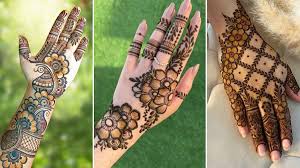
The henna glue utilized to form the design is ruddy brown, and the henna applied to the head is additionally of this color. And the plans are brief, which blurs after some days.
Bride’s Henna Plan Agreeing to Convention:
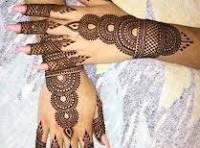
Agreeing to the convention, the bride is disallowed from doing any household work so that the bride’s hands and feet are clean so that when the henna plan is made on the hands and feet, it looks wonderful.
How long does the Henna Plan Colour Remain on the Hands?
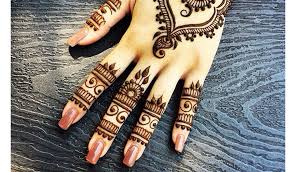
As long as the recolour remains and the darker the recolour, the more adore she can anticipate from her spouse and in-laws. That’s, the longer the henna remains on the hands, the darker the color gets to be.
Henna has normal cooling properties and has been utilized for centuries by individuals living in hot climates to cool their body temperature, which is said to diminish cerebral pains and other indications of sickness.
History of Henna:
The word henna comes from the Arabic word al- Hanna, the most punctual composed proof of henna being utilized to enhance bride dates back to 2100 BC in northwestern Syria.
Henna has been utilized in numerous nations, including North Africa, the Center East, South Asia, and Europe, and is utilized by most religions.
Lasani Intermezzo Henna Plan:
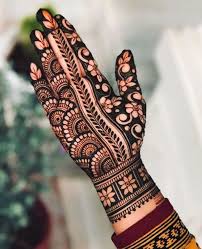
Henna glue is made from a plant that develops in warm climates called Lawson inside. The takes off, blossoms and twigs of the plant are ground into a fine powder, at that point, a glue is made with water, which has common biting-the-dust properties, and after that, it is poured into a plastic cone, after which various designs are made with the assistance of this cone.
How to Form Henna Plan Glue:
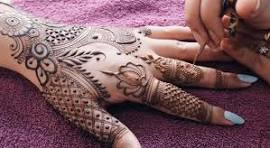
Henna powder is blended with hot water to create a thick paste. The reddish-brown recolour is frequently utilized to beautify the skin of the hands and feet, but it is additionally utilized to color nails, dress, and hair. The glue is set in a plastic sack and molded into a henna cone, which is at that point utilized to form plans.
Applying Henna with Dried Henna Plan Clears Out:
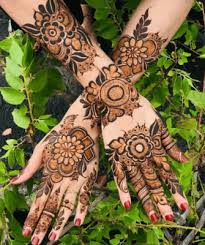
The conventional craftsmanship of portraying the hands, feet, or body with glue made from the dried takes off of the henna plant. This craftsmanship is very ancient and ordinarily has cherry ruddy to brown stains that take off lovely marks on the skin. But this may shift with the sum of time cleared out and a run of other components.
When did the Hone of Henna Start?
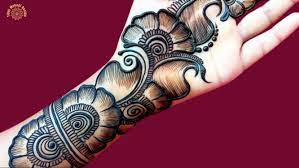
Henna began within the Center of East and North Africa over 5,000 a long time ago. At that time, it was utilized as a simple and minimal hone. It has been utilized for imaginative, ceremonial, and ceremonial purposes. Archaeologists have indeed found mummies with hennaed hands. It is very popular in each locale of the world as an effortless, transitory body art.
Mehndi in Indian Weddings:
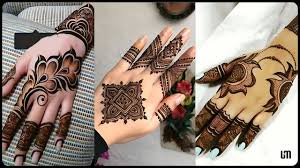
Indian weddings or Hindu weddings are fragmented without a mehndi ceremony. Separated from this, they feel that their wedding is fragmented unless they apply mehndi on their hands. The mehndi custom is taken after in each portion of the nation where the bride’s hands are beautified with the wonderful ruddy color of mehndi. The same mehndi is additionally connected to the groom’s hands as a convention.
At these wedding events, most of the conventional Indian plans are done on the bride’s hands.
Mehndi Convention from the Mughals Period:
The Mughals instructed us all about the history of Mehndi and presented it to India amid the 12th century Advertisement. The convention of Mehndi began during the Mughal period and is still going on.
At this time, the royals and the wealthy utilized to brighten themselves with it.
Require for Craftsmen and Beauticians to Form Complicated Plans:
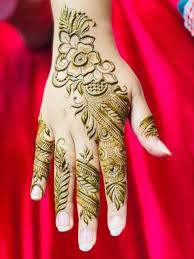
The design was made in a complicated manner by specialists or beauticians. To make complex plans, you would like a mehndi craftsman and beautician, for this, you would like to contract a talented craftsman.
What is the Root of Mehndi?
The clears out of the henna plant contain a characteristic and exceptionally viable colouring shade, which we apply to our hands and feet. In expansion, henna is additionally utilized to color hair and dress.
Employments of Henna for Colouring Hair:
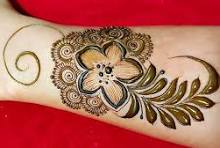
After blending it into glue, you’ll be able to apply it straightforwardly to your hair or skin for a normal color. At that point take off it for an hour or half an hour and after that expel it. It’ll take off a recolour exceptionally rapidly. Henna briefly tattoos the body and for all time colours the hair. Henna plan as a craftsmanship frame moreover has a few superstitions related to it.
The Bride’s Relationship with the Colour of Henna:
In India, it is accepted that the darker the color of henna plan on the bride’s hands, the superior her relationship with her mother-in-law. In a few places, it is additionally said to demonstrate the quality of adore between the bride and prep. Separated from this, the color of henna is additionally measured by the husband’s adoration.
Many traditional henna plans are mystery images of success, cherish, devotion, richness, and great luckiness.