Introduction
Mehndi, too known as henna, is an old frame of body craftsmanship that has captivated individuals over societies for centuries. It’s more than fair a brief tattoo; it’s a reflection of convention, culture, and imagination. This article investigates the assorted world of Mehndi plans, covering their history, different styles, events, fixings, and more.
Mehndi could be a frame of brief skin decoration employing glue made with henna. Within the West, mehndi is commonly known as a henna tattoo, even though it isn’t a lasting tattoo.
Mehndi may be a prevalent frame of body craftsmanship in South Asia and takes after comparative conventions of henna as body craftsmanship found in North Africa, East Africa, and the Center East. There are numerous diverse names for mehndi in the dialects of South Asia.
There are numerous diverse plans and shapes of henna, frequently known as henna. For celebrations, ladies customarily apply mehndi to their hands and feet, in any case, a few individuals, such as cancer sufferers and ladies with special, may moreover choose to embellish their scalps. Wealthy brown is the foremost well-known henna colour, which employs a normal colour made from the Lawson inermis plant. But present-day designs presently consolidate tints like white, ruddy, dark, and gold, empowering more individualized and shifted imaginative expressions.
Eid al-Fitr and Eid al-Adha
In South Asia, henna is connected to the body in both Hindu and Muslim weddings. Hindu ladies apply henna amid celebrations like Karva Chauth, Vat Puritanism, Diwali, Bhai Dooj, Navratilova, Duran Puma, and Tee. Muslim ladies apply henna during events like Eid al-Fitr and Eid al-Adha.
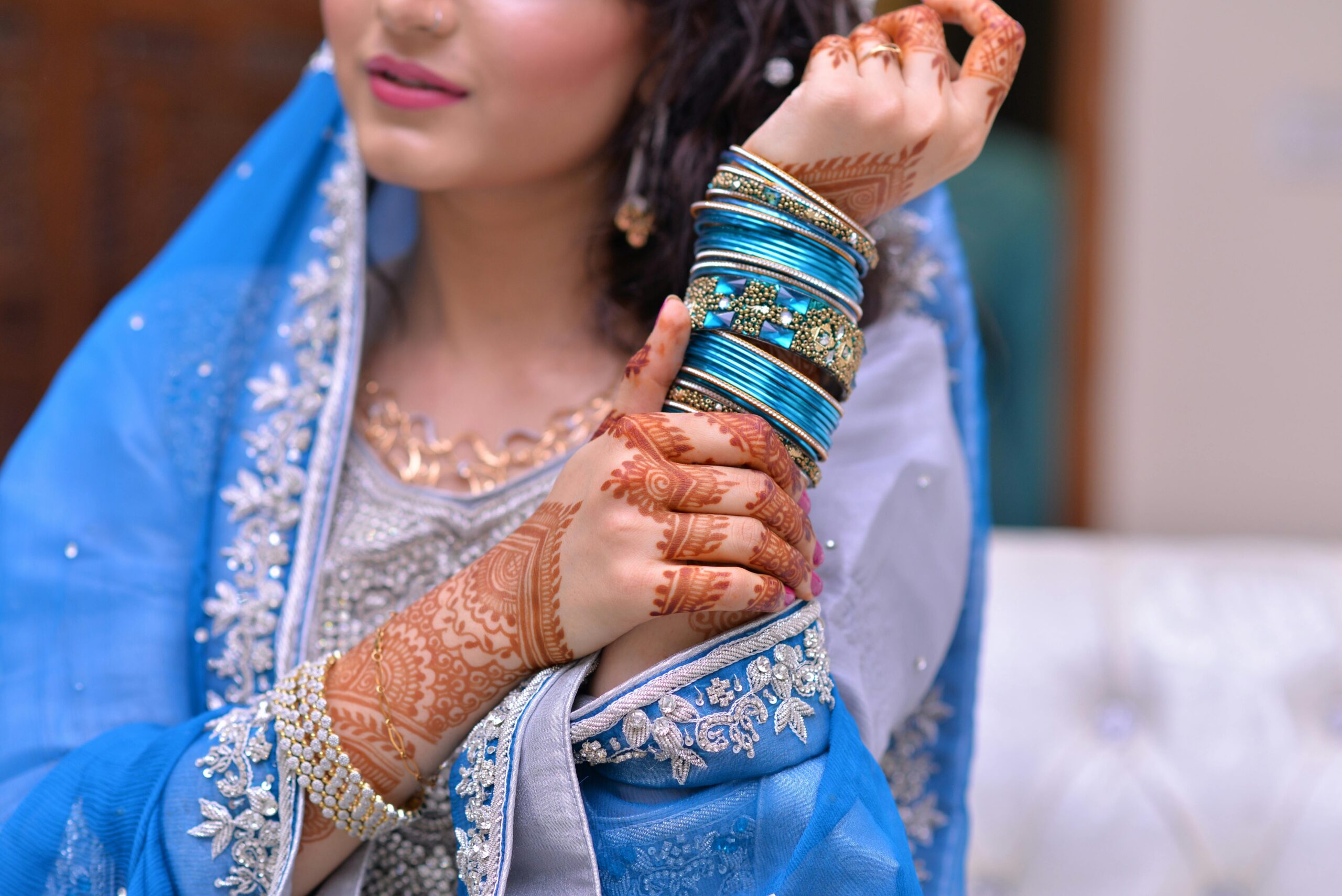
At Hindu and Sikh celebrations, ladies frequently have henna connected to their hands, feet, and sometimes the backs of their shoulders. On the other hand, men usually have it connected to their arms, legs, back, and chest. For ladies, it is more often than not drawn on their palms, backs of their hands, and feet, where the plan will be clearest due to differentiation with the lighter skin on these surfaces, which normally contains less of the colour melanin.
History of Henna:
A Travel Through Time The roots of Mehndi can be followed back over 5,000 a long time to old Egypt, making it one of the world’s most seasoned shapes of body craftsmanship. The hone then spread to India and other parts of South Asia, where it got to be an indispensably portion of social and devout conventions. Mehndi has been utilized to embellish brides and celebrate different celebrations and breakthroughs.
Fixings and Arrangement of Mehndi Glue
Mehndi glue is the heart of this craftsmanship frame, and its creation may be a fastidious handle. The essential fixing is the dried clears out of the henna plant. These clears are ground into a fine powder, which is at that point blended with other normal fixings such as lemon juice, tea, or basic oils. This blend is cleared out to rest for a few hours to permit the colour to discharge.

Styles and Sorts of henna Plans
Mehndi plans come in a horde of styles, each with its unique charm. Here are a few of the foremost prevalent sorts of henna plans:
Conventional Indian Mehndi:
Characterized by complex and symmetrical designs, conventional Indian henna plans regularly incorporate peacocks, paisleys, blossoms, and whirls. These plans are connected to the hands and feet, covering them with fragile, beautiful patterns.
For all the advanced magnificence darlings, God is within the points of interest. The huge Eid magnificence planning is now not around the hair, cosmetics, and nails—the henna that marks as an accentuating component for each young lady is similarly vital. Gone are the days when young ladies permitted henna craftsmen to apply the same 20 tedious designs—today, the young ladies come with their claim Pinter est sheets and make beyond any doubt their aesthetic shine, with fun and idiosyncratic plans.
In case you aren’t a standard henna significant other prepared with an organised of references or indeed if you are actively arranging an iftar party, as well involved to decide—we’ve got you secured. Scroll to check 18 modern wedding henna designs you ought to bookmark for the up and coming merry season.
Arabic Mehndi:
Arabic Mehndi plans are known for their strong, bigger themes and botanical designs. They tend to take off more skin uncovered, making a striking difference between the complicated henna and the uncovered skin.
Pakistani Mehndi:
Pakistani henna plans combine components of both Indian and Arabic styles, coming about in a combination of nitty-gritty designs and strong, noticeable plans.
Moroccan Mehndi:
Moroccan henna is characterized by geometric shapes and patterns. It frequently incorporates diamond-shaped plans, making a one-of-a-kind and eye-catching look.
Bridal Mehndi:
Bridal Mehndi is one of the foremost expound shapes of henna craftsmanship. It covers the bride’s hands and feet with complex designs, frequently including themes that symbolize adore, thriving, and the couple’s travel together.
Mehndi for Uncommon Events
Mehndi plays a noteworthy part in different uncommon events and celebrations:
Weddings:
Maybe the foremost well-known event for henna, it is a fundamental portion of Indian and Pakistani weddings. Brides ordinarily have their hands and feet embellished with complicated henna plans, and some of the time indeed the prep gets a little henna plan on his hand.

Festivals:
Mehndi may be a central component of celebrations like Diwali and Eid. Families come together to apply Mehndi on their hands and share the delight of the event.
Karva Chauth:
Hitched ladies in North India regularly apply Mehndi on Karva Chauth, a celebration where they are quick for the long life and well-being of their spouses.
Child Showers:
In a few societies, Mehndi is connected amid child showers to favor the eager mother and celebrate the looming entry of an unused family part.
Mehndi as Frame of Self-Expression
Mehndi isn’t almost about convention; it’s also a frame of self-expression and imagination. Numerous individuals, particularly the more youthful era, utilize Mehndi to form a fashion explanation. They test with distinctive plans, blend and coordinate styles, and indeed consolidate modern components into their Mehndi craftsmanship.
The Recuperating Properties of Mehndi
Separated from its tasteful offer, henna has been utilized for its helpful properties. It is accepted to have cooling impacts on the body, making it a prevalent choice amid hot summer months. Also, henna is utilized to fortify hair, condition the nails, and treat different skin conditions.
Caring for Your Mehndi Plan
Once you’ve decorated your skin with a staggering Mehndi plan, it’s basic to require appropriate care of it. To guarantee the life span and energy of the recolor, dodge contact with water for the primary 24 hours, as dampness can help the colour. Applying a blend of lemon juice and sugar on the dried Mehndi can upgrade the colors and life span.

Mehndi beautification of palms and feet
Mehndi beautification of palms and feet of a bride
Most punctual utilize of henna colour can be followed back to old Babylon and Egypt. In 6th century Arabia, its utilization was well known and utilized in medication, covering certain agnostic traditions within the same verifiable and social setting as Islam. In India, it was in use by the 4th century CE, which is proven by the cave expressions of the Deccan region.However, it likely became predominant around the 12th century CE, helped by the rise of Islam within the subcontinent.
Handle
The glue is made from the powdered dry takes off of the henna plant, Lawson inermis.
Mehndi glue is more often than not connected to the skin employing a plastic cone, a paintbrush, or a adhere. Fifteen to twenty minutes after application, the mud will dry and start to split. The painted range is at that point wrapped with tissue, plastic, or therapeutic tape to bolt in body warm, making a more serious colour on the skin. The wrap, which isn’t a conventional strategy, is worn for two to six hours, or now and then overnight, and after that evacuated.
When to begin with evacuated, the henna plan is pale to dim orange in colour and gradually darkens through oxidation, throughout 24 to 72 hours. The ultimate colour is ruddy brown and can final anyplace from one to three weeks depending on the quality and sort of henna glue connected, as well as where it was connected on the body (thicker skin stains darker and longer than lean skin).[citation required]
Likely due to the craving for a “tattoo-black” appearance, a few individuals include the manufactured colour p-methamphetamine (PPD) in henna to deliver a dark colour. PPD may cause direct to serious unfavorably susceptible responses when connected to skin.
Utilization
Mehndi could be a ceremonial craftsmanship frame common in India, Pakistan, Bangladesh, and Afghanistan. It is regularly connected to weddings for Sikh, Muslim, and Hindu brides. In Rajasthan, the grooms are given plans that are regularly as expanded as those for brides. In Assam, separated from marriage, it is broadly utilized by single ladies during Singalong Bijou.
Among South Asian Muslims, mehndi could be a common convention for brides as well as other young ladies at weddings. It is additionally done for Eid on Chaand Raat. There are experts as well for this whereas other individuals do this by their possess.

Well-known Mehndi designs
Arabic mehndi plans
This design is drawn on the palm. For the most part, it begins from one corner of the wrist and closes at the fingertip on the inverse corner. Vine, lace, and flowers are the most important components of this pattern.[citation required]
Mandala mehndi plans
A mandala could be a geometric setup of images utilized in different otherworldly conventions including Hinduism, Buddhism, Jainism, and Shinto. Different setups of mandalas are drawn on the centre of the palm in this mehndi pattern.[citation required]
See too
Alta
Body portray
Jagua tattoo
Masonjoany
Brief tattoo
Plans To Suit Each Bride’s Tasteful –
1. Half and Half
In the event that the all-over design isn’t your thing, this exquisite half-and-half symmetrical plan is fair right for you.
2. Angle Vines
To include profundity in your plans, play with measurement, angle, and line width. A mehndi plan with an angle includes so much more definition.
3. The Flower Squares
Isn’t symmetry key for a few of us? In case that’s you. The botanical squares are the impeccably adjusted mehndi plan you’ll do.
4. The Classic Mandala
You’ll be able never to go off-base with the classic mandala—a concentric, spaced-out design.
5. Inter-laced takes off
Who wouldn’t revere a clean, flower mehndi plan that’s simple to form and spares up on time?
6. The Moderate
Do not truly get the thought of more full hands? Keep it basic working your way around the fingers.
7. More full Geometry
This complex pattern-focused plan culminates for the bride who is fastidious approximately each small detail.
8. Exploratory Colour
The routine coloured mehndi doesn’t very entertain you. In that case, you have to explore with coloured henna, one that suits you the best.
9. Hitler kilter Botanical
When theoretical is so much more appealing, decide on this one-of-a-kind minimalist floral mehndi design.
10. Pickwick Botanical
Propelled by the conventional pichwai portrayal – oversimplified traces with emphasise all-over straight themes.
11. Geometric Lotus
On the off chance that you appreciate the single theme slant, attempt this charming geometric lotus design with little blooms.

12. Foliage Borders
Doing the uncovered least is your fashion? Go in with straight foliage and wrist mehndi groups.
13. Flower Mandala
Include botanical components in the symmetric mandala plan. Emphasise the botanical plan utilizing dabs.
14. The Bohemian Bride
In case you need to go all boho-chic for your unconventional wedding, this can be a unique must-try plan.
15. The Bracelet Amulet
The wonderful Armour will shield you from any threats – a combination of flower and geometrical themes.
16. Geometric Rehash
The excellent Armour will shield you from any threats – a combination of botanical and geometrical themes.
16. Geometric Rehash
In case little, diminutive subtle elements aren’t your thing, select the bolder mehndi plan with scaled-up foliage and blooms instep.
18. Divided Out Flower
An equitably divided design that emphasis the side of the palms with direct foliage.
Emphasis your mehndi with the culminated nail trim, tap to examine our article on 15 Wedding Nail Craftsmanship Plans For Brides Who Need To Go Past The Fundamental French Tips
Conclusion:
Henna Plans – A Mix of Convention and Creativity In conclusion, henna plans are a lovely mix of convention and creativity that have stood the test of time. From weddings and celebrations to ordinary self-expression, henna proceeds to be a cherished and cherished frame of body craftsmanship. Its history, different styles, and centrality in different societies make it a captivating and persevering craftsmanship frame that holds a uncommon put within the hearts of numerous.
Whether you are a bride celebrating her uncommon day, a festival-goer revealing in the bliss of the event, or basically somebody looking to decorate yourself with a touch of craftsmanship, Mehndi plans offer a world of inventiveness and magnificence holding up to be investigated. So, grasp this old craftsmanship shape, let your creative energy run wild, and wear your Mehndi plan with pride and elegance.